Property transaction intermediary in Turkey
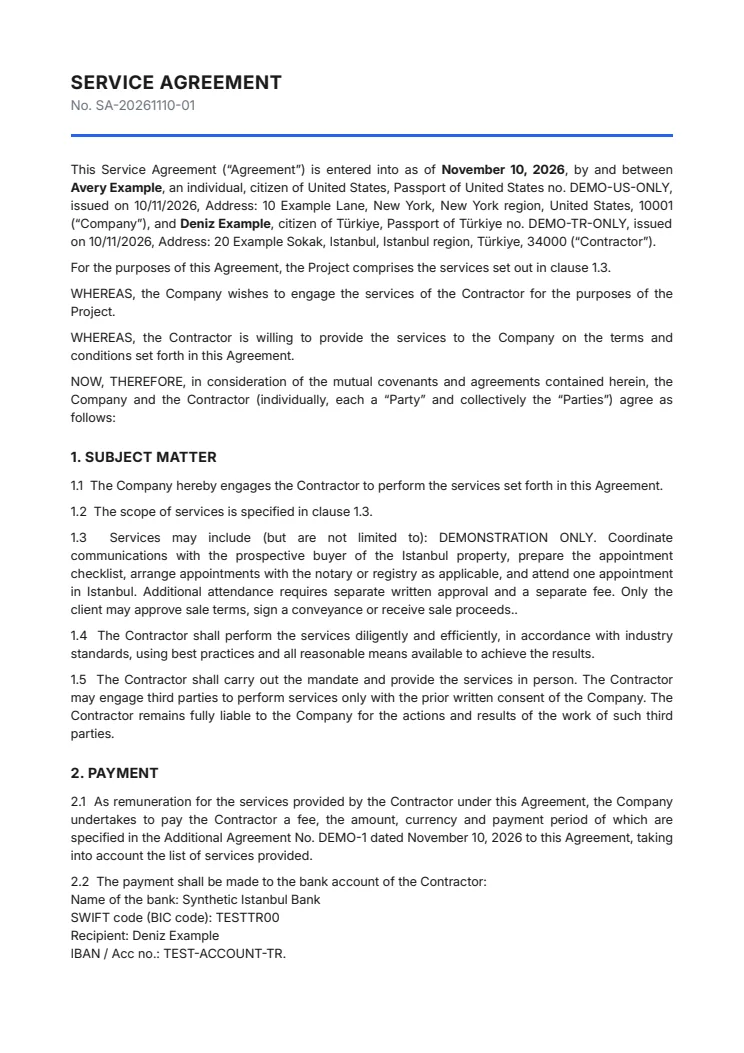
A New York client and an Istanbul contractor agree on the scope of services and the number of visits.
These are a few possible ways to use forma. Each fictional transaction illustrates a different workflow. For your own work, choose the template, parties and terms that fit.
Starting point
The contractor handles buyer communication, a document checklist and appointments. The client retains responsibility for the sale, receipt of funds and execution of the transfer.
What the parties did
In the browser the contractor limits attendance to one visit. Additional visits require agreement and separate payment. The parties shorten termination notice to seven days.
Outcome
The client reviews the changed clauses and generates a one-month, $1,500 services agreement. The agreement and scope schedule are signed in sequence. The acceptance act is signed upon delivery.
Prepare the intermediary’s scope of services
Start with the provider’s task, rather than the property sale itself. In this example the intermediary contacts the buyer, gathers information and arranges meetings. Identify the deliverable, deadline, fee and expenses for each service. State which actions need further client approval, including extra visits, subcontractors and changes to the budget.
Negotiate the scope and sign the package
Send the review file to the provider. When they propose fewer meetings, compare the revision with both the original scope and the fee. Read the complete final agreement together with its schedule before signing. Signing the main agreement does not replace signing the schedule: check both documents, return the resulting files to the app and inspect each party in the signing table.
What this example does not cover
This is a services agreement between client and provider, not a transfer of property ownership. Authority to act, registration steps and transaction formalities need separate consideration. Device time and a self-declared name help trace actions on a file, but do not independently verify identity or signing authority. Acceptance belongs to delivery of the work, rather than automatically occurring when the contract is signed.